About
What if damage were a prompt: what stories and repair strategies might it generate?
This workshop invites participants to work with an AI-supported workflow in which a Vision-Language Model (VLM), accessed through a mobile interface, translates heterogeneous data — photographs, sketches, notes, measurements — into spatial models and procedural representations of possible repair interventions. Rather than prescribing a single solution, these proposals make different repair strategies and successive intervention steps explicit and open to comparison and debate.
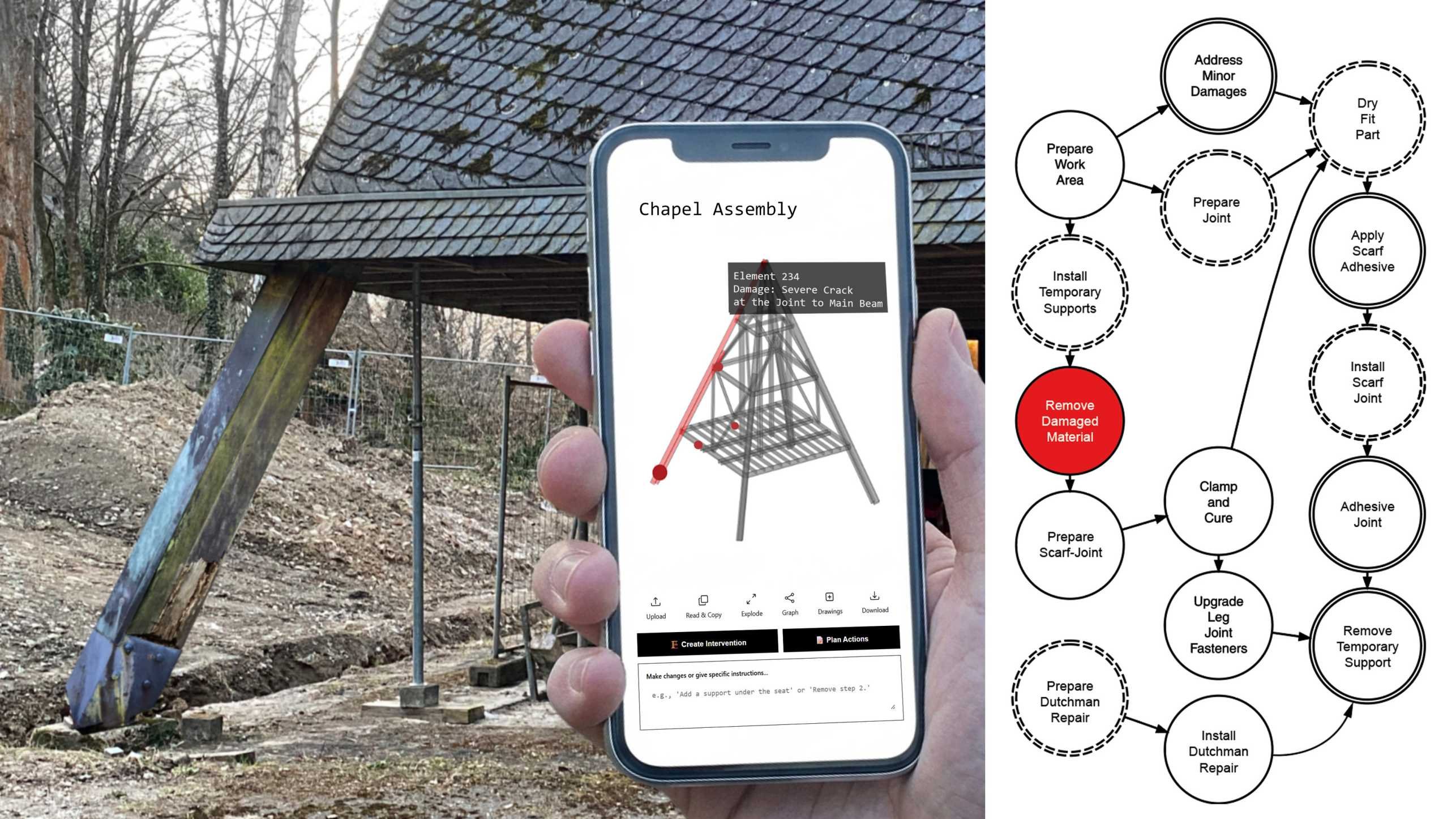
Working through concrete examples — including doors, windows, and a damaged pillar from a larger architectural use case — participants will examine how different repair decisions respond to feasibility, care, and future use. The workshop highlights how AI can support the analysis of existing structures and the development of repair designs, while human expertise remains essential to interpretation and judgment.
The workshop is a collaboration with the ETH Chair of Construction Heritage and Preservation, whose team will contribute domain expertise in preservation, material practices, and repair methodologies, and will join the closing discussion to respond to participants’ repair proposals.
What you need
Participants use a link provided on the day to access the mobile interface on their own phone or tablet. No software install is required.
Link: Repair_Workspace